Longevity Training Matters After 50
Most home workout advice for people over 50 begins with the body’s appearance: lose the belly, tone the arms, fit the old jeans. Those are fair goals, but the mirror says little about whether you can get off the bathroom floor, carry laundry up the stairs, or catch yourself after a stumble. A better starting question is what you want to still be able to do at 80. The answer gives you a routine, and it gives you a way to tell whether the routine is working. Longevity Training Matters After 50 is an important topic if you want to stay healthy, active, and independent as you age.
This article walks through that approach to longevity training after 50, step by step, using only what you have at home.
Why the mirror stops being the best measure of a workout after 50
Appearance changes slowly and is influenced by many things besides training, including diet, sleep, and how light falls in the bathroom. A workout can leave you stronger and steadier with no visible change at all. If the mirror is your only feedback, that progress goes unnoticed and motivation fades.
Appearance also points you toward the wrong exercises. Training for looks tends to favor the muscles you can see in a mirror: biceps, shoulders, chest. Staying independent depends heavily on the ones you cannot see, such as the hips, the back of the legs, and the muscles that hold your trunk upright.
A function-based goal fixes this. “Get up from the floor without grabbing the sofa” is concrete, you can test it today, and you will know when you have improved.
What longevity training actually means: capacity you can use
Longevity training means building physical capacity you can use in daily life, and keeping it as the years pass. Capacity here covers strength, balance, mobility, and the stamina to keep going at a steady pace.
The measure is what you can do, not what a scale reads. Can you lift a heavy bag into the car? Can you stand on one foot while putting on a sock? Can you walk for half an hour without stopping to rest? Each of these is a capacity, and each can be trained.
This also changes what counts as a good session. A session that leaves you exhausted is not automatically better than one where you practiced standing up from a low seat with good control. The aim is to get a little better at real tasks, week after week, without getting hurt.
Muscle matters a great deal in this picture, since strength is what makes most of these tasks possible. If you want more background on why, the post on muscle loss after 60 covers it in detail.
Write your own list of things you want to still do at 80
Before you choose a single exercise, spend ten minutes with paper and a pen. Write down the things you want to be doing in your 80s. Be specific, and use your own life as the source, not a generic list.
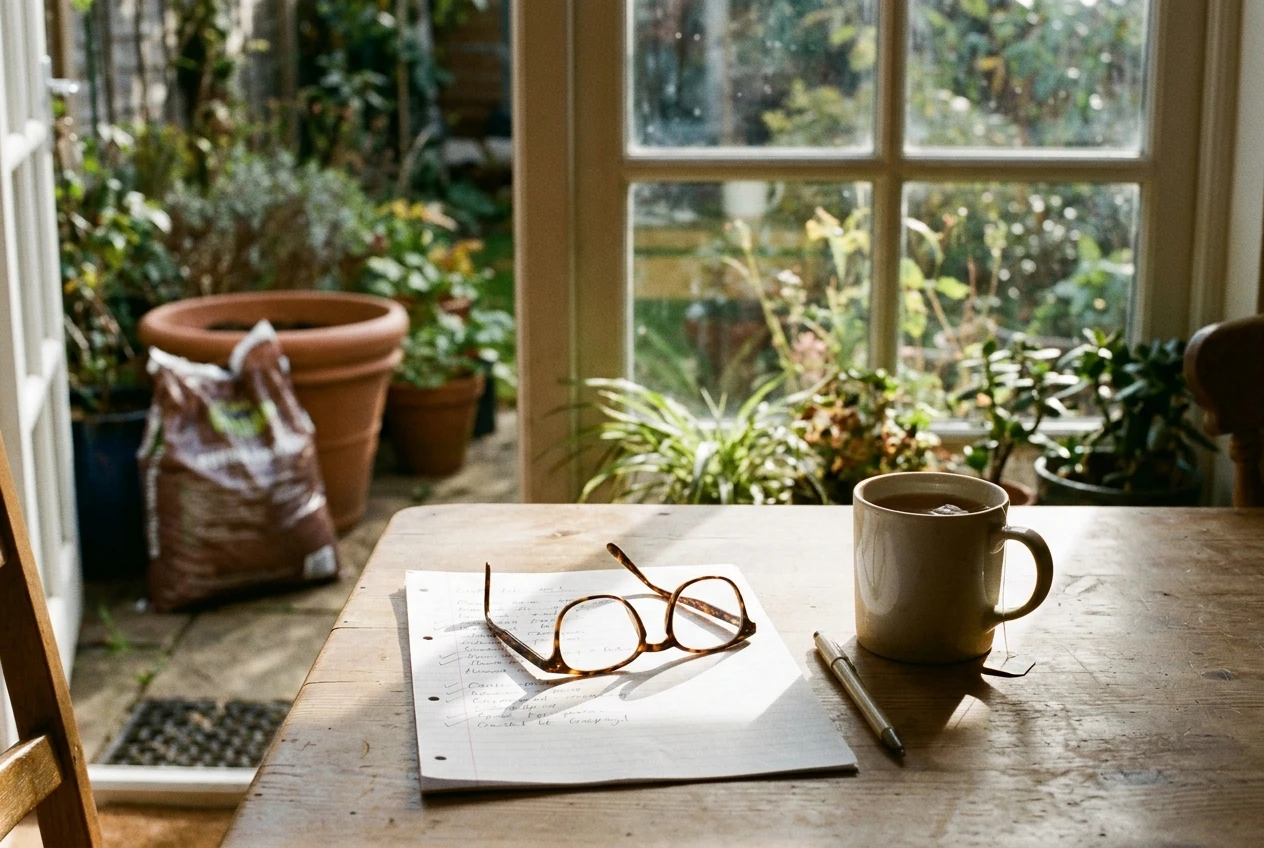
Some prompts to get you started:
- Where do you want to be able to live? In a home with stairs, a garden, a second floor?
- What do you want to carry: groceries, a suitcase, a grandchild, a bag of potting soil?
- What do you want to do on the floor or at ground level: play with children or pets, garden, stretch, pick things up?
- Where do you want to go: long walks, travel, uneven trails, crowded streets?
- What would you hate to have to ask someone else to do for you?
Aim for five to ten items. Then next to each one, write the movement underneath it. “Carry my own luggage” is a carry. “Garden on my knees” involves getting down and up from the floor, plus a hinge. “Walk on the beach” asks for balance on uneven ground and a steady pace.
You will notice the same few movements showing up again and again. That is the basis for the routine.
The six movements to build a home routine around
Nearly every item on a real-life list reduces to six movements: get up, hinge, push, pull, carry, and balance. A steady pace, meaning the ability to keep moving at an easy effort for a while, sits alongside them and is trained mostly through walking or other steady movement.
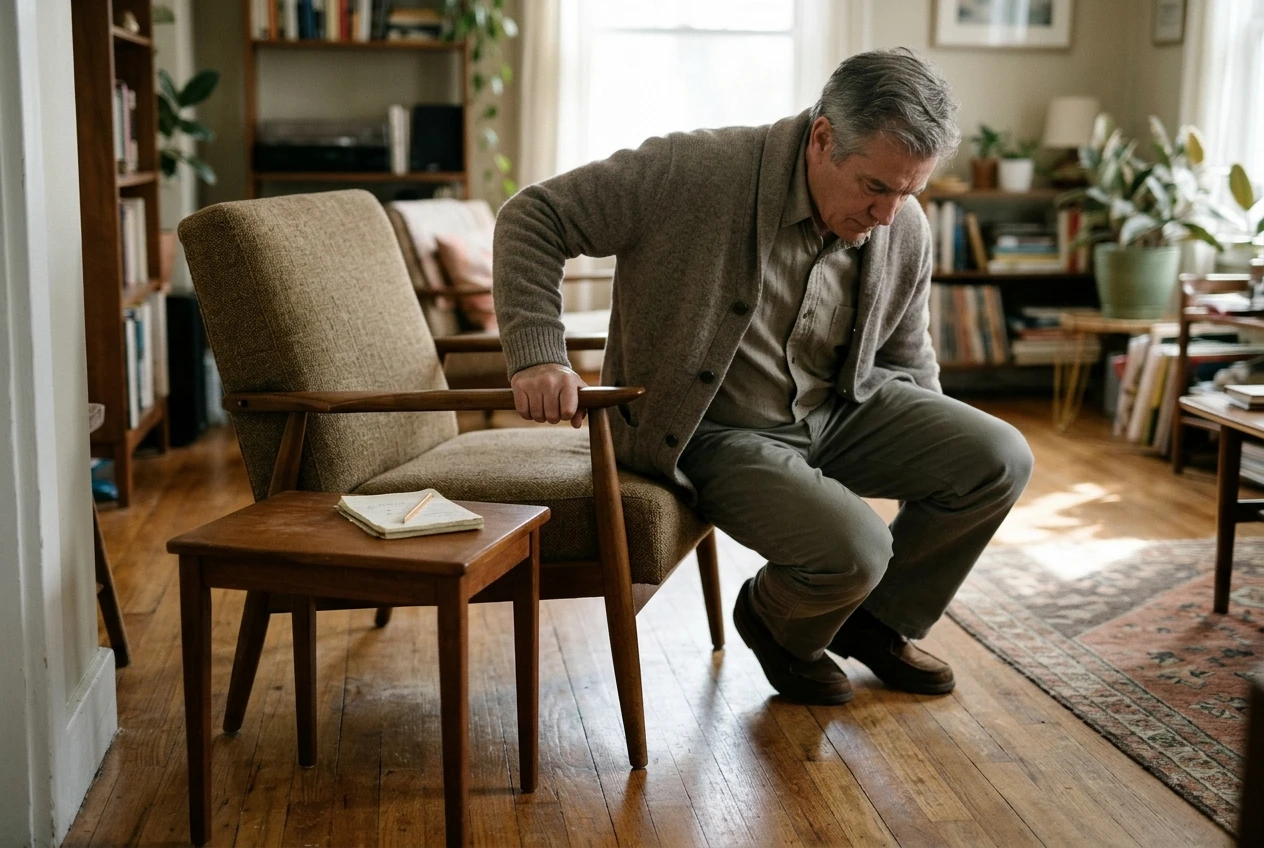
Get up. This covers standing from a chair and getting down to and up from the floor. At home, practice with a sturdy chair, then a lower seat, then the floor beside a stable piece of furniture you can hold if you need to.
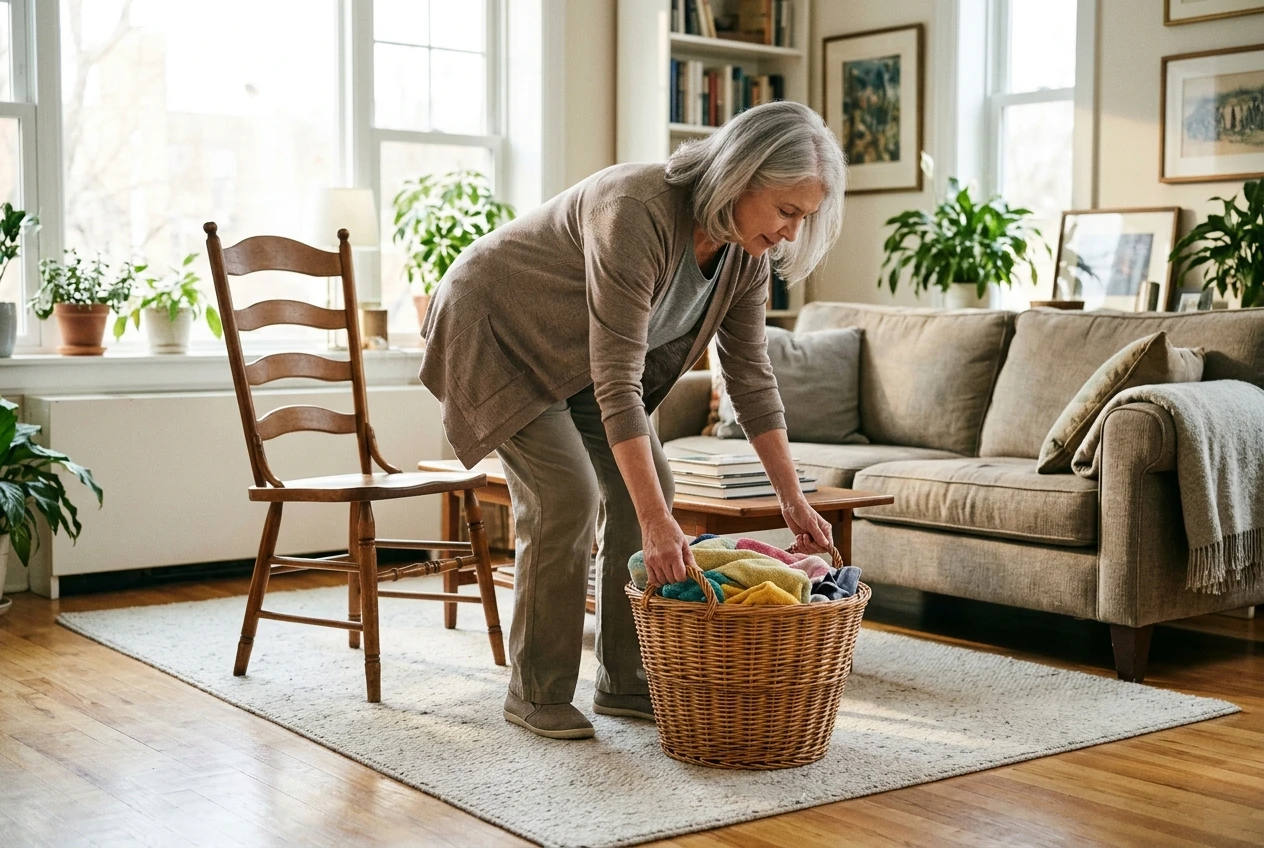
Hinge. A hinge means bending at the hips with a flat back, as when you pick up a laundry basket or a dropped item. Train it by pushing your hips back with a light weight or a household object held in front of you, until you feel the back of your legs working.
Push. Pushing is what you do when you press yourself up from a chair or shove a heavy door. Wall push-ups are the easiest version. Pushing against a kitchen counter or a sturdy table is the next step, and the floor comes after that.
Pull. Pulling means rowing or drawing something toward you, such as opening a stuck door or hauling a bag out of the car. A resistance band anchored to a door or a stable post works well. If you want a routine built around bands, the best resistance band fitness routine is one place to look.
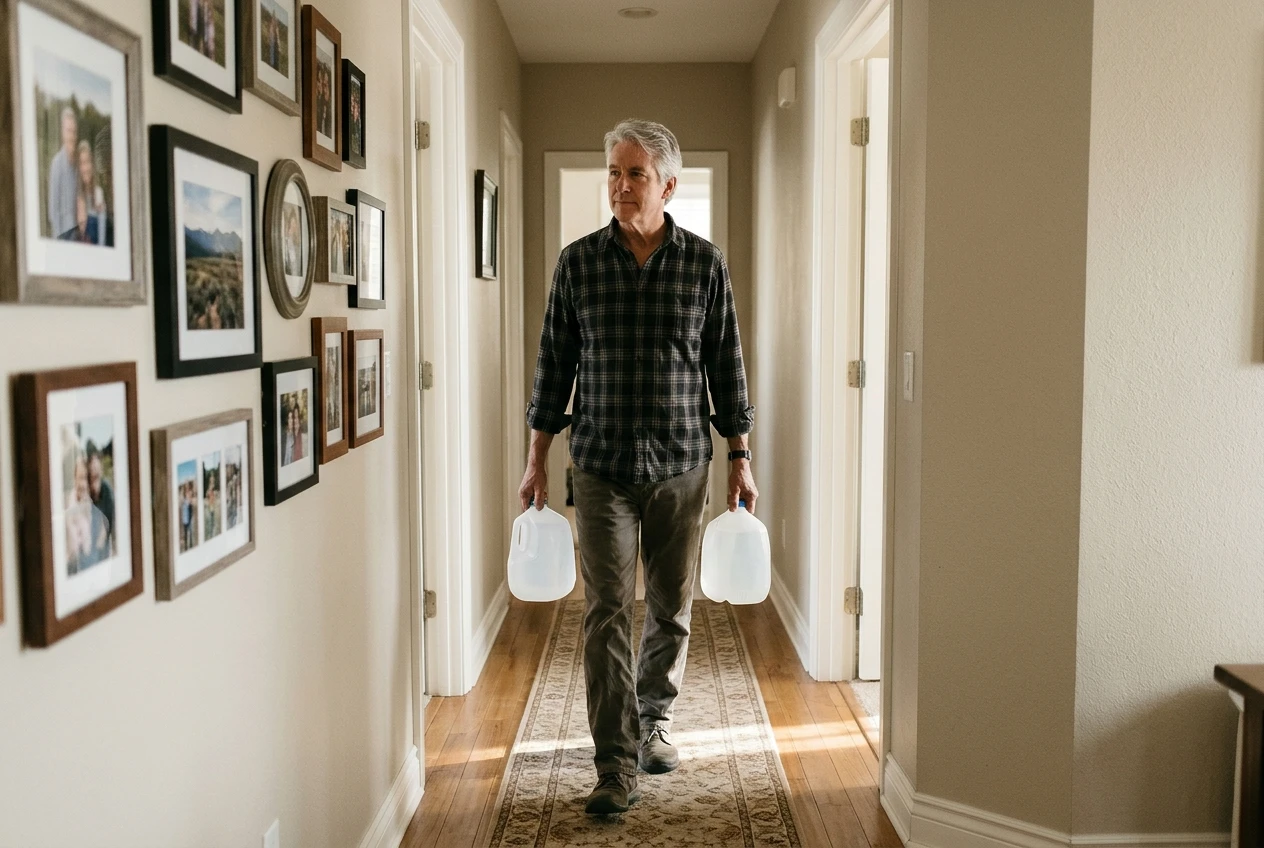
Carry. Carrying trains your grip, your trunk, and your legs together. Use two bags or two filled water jugs, one in each hand, and walk a set distance with an upright posture.
Balance. Balance is a skill that responds to practice. Stand near a counter, shift your weight to one foot, and hold. Progress by reducing how much you touch the counter.
A simple at-home check to see where you are starting
A check gives you a baseline, and a baseline lets you see change. Do these on a day you feel well, with a stable surface within reach, and write the results down. Stop any test that causes pain or dizziness.
- Get up: Count how many times you can stand fully from a chair and sit back down in 30 seconds, with your arms crossed over your chest. If you cannot do it with crossed arms, note how much help from your hands you need.
- Floor: Lower yourself to the floor beside a sturdy piece of furniture and get back up. Record whether you needed zero, one, or two hands for support, and whether you needed the furniture.
- Hinge: Pick up a light object from the floor with a flat back and hips pushed back. Note whether it feels smooth or whether you round your back.
- Push: Do wall or counter push-ups with good form until it gets difficult. Record the number and the surface you used.
- Pull: With a light band, count how many controlled rows you can do. Record which band and how many.
- Carry: Carry a bag in each hand along your hallway or yard. Record the total weight and the distance you managed with good posture.
- Balance: Near a counter, stand on one leg and time how long you hold with little or no touching. Test both sides, since they often differ.
- Steady pace: Walk at a comfortable pace and record how many minutes you can keep going before you want to stop.
Retest once a month. Use the same chair, the same bag, and the same band, so the numbers mean something. A small gain, like two extra stands or ten extra seconds on one leg, is real progress.
How to keep some aesthetics goals without letting them drive the plan
Wanting to look good is not shallow. It is a normal reason to exercise, and it can keep you consistent. The trouble comes when appearance alone decides what you do, because it pushes you toward extreme diets or workouts your joints cannot tolerate.
A workable arrangement is to let function set the plan and treat appearance as a side effect. Strength work that builds your legs, hips, and back will change how you look anyway. Better posture changes how clothes fit. Eating enough protein and sleeping well support both goals together.
If you want a specific appearance goal, such as reducing belly fat, give it a place in the plan without moving it to the center. The post on 7 healthy habits to reduce belly fat covers daily habits that sit alongside training. Check your function numbers monthly, and treat any change in the mirror as a bonus.
A first week of home sessions built around function
This week uses three short strength sessions and some easy walking. Each strength session takes about 25 to 30 minutes. Leave at least one rest day between them, and choose a weight or difficulty that lets you finish each set with a couple of repetitions to spare.
Session 1
- Chair stands: 2 sets of 6 to 8
- Hip hinge with a light object: 2 sets of 8
- Wall push-ups: 2 sets of 8 to 10
- Single-leg stand at the counter: 3 holds per side
Session 2
- Band rows: 2 sets of 10
- Floor get-down and get-up: 3 slow repetitions, near furniture
- Two-bag carry: 3 walks of about 20 steps
- Heel-to-toe walking along a wall: 3 passes
Session 3
- Repeat Session 1, with a slightly harder version of one exercise, such as a lower chair or a counter push-up in place of the wall.
- Finish with a longer easy walk.
On the other days, walk at a pace where you could still hold a conversation. Add a few minutes each week if it feels comfortable.
For more balance options to use in your sessions, see the best balance exercises for seniors. They are useful for swapping in once the single-leg stand starts to feel easy.
Retest after four weeks using the same checks as before. If a movement did not improve, repeat that part of the routine more often before making it harder.
When to check with a doctor or physical therapist before you begin
Talk with your doctor before starting if you have a heart condition, high blood pressure that is not well controlled, diabetes, osteoporosis, joint replacements, or if you have not exercised in a long time. The same goes for recent surgery, dizziness, or a history of falls.
Stop and get medical advice if you notice chest pain, unusual shortness of breath, faintness, or sharp joint pain during or after exercise.
A physical therapist can be especially helpful if the check turns up a movement you cannot do safely, such as getting up from the floor. They can see how you move, adjust the exercises to your body, and give you a progression that fits. One or two sessions to set up a home plan is often enough to start with confidence.
Your next step
Once you know which movements you are training, you can choose kit that supports them without cluttering your home. Pick your first piece of home exercise equipment next: read Best Home Equipment For Healthy Aging.