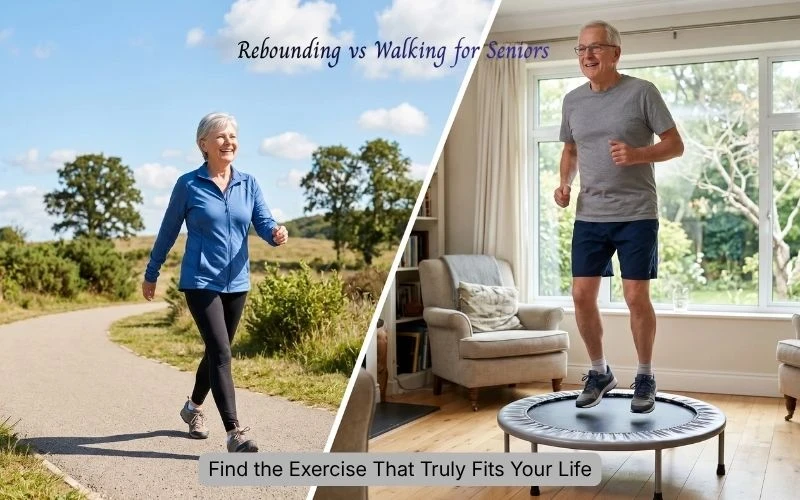
Find the Exercise That Truly Fits Your Life
As we get older, staying active becomes less about chasing fitness goals and more about feeling good in our bodies. Many people in their 60s and beyond compare rebounders vs walking for seniors to decide which fits best into their exercise plans.
Both rebounding and walking are gentle, low‑impact, and easy to start, but they offer different benefits. Depending on your joints, balance, and lifestyle, one might feel more comfortable than the other.
Let’s walk through the differences in a way that you can choose what is best for you.
Why Exercise Matters More After 60
As we age, our bodies begin to change. We gradually lose muscle mass and bone density, and our balance, coordination, and cardiovascular endurance may decline.
Unless we are intentional, these changes happen, and they can affect strength, stability, and overall independence if we become too sedentary.
The good news is that regular movement can slow — and sometimes even reverse — many of these effects.
Consistent exercise helps improve heart health, strengthen muscles, and support bone density. It also reduces the risk of falls, which become more common as we age.
Beyond the physical benefits, staying active boosts mood, increases energy levels, and supports mental well-being.
The key is choosing exercise that is both effective and gentle on your body, so you can stay consistent and feel confident while moving every day.
Rebounders vs Walking for Seniors: What’s the Real Difference
If you’ve never stepped on a rebounder before, it might look a little intimidating. But it’s really just a small trampoline designed for gentle bouncing—not the high jumps kids do in the backyard.
Many seniors use a stability bar, so you’re not bouncing wildly; you’re simply moving up and down in a controlled, cushioned way.
Walking, on the other hand, is familiar. You’ve been doing it your whole life. It doesn’t require equipment, and you can do it almost anywhere—your neighborhood, a park, or even indoors at a mall when the weather isn’t cooperating.
Both are excellent forms of movement. The real question is which one feels better for your body and your daily routine.
A Closer Look at Rebounding
Rebounding is surprisingly gentle. The trampoline absorbs most of the impact, so your knees, hips, and back don’t take the same pounding they might feel on pavement. Even a small bounce engages your legs, core, and stabilizer muscles, which help with balance and posture.
Many seniors say rebounding feels “light” or “fun,” almost like their body is moving without effort. And because you can do it indoors, it’s a great option if you live somewhere with cold winters or hot summers.
A Closer Look at Walking
Walking is one of the most natural exercises we have.
It is a steady, rhythmic movement, at a comfortable pace and can be done outdoors, indoors, on a treadmill, or even around your home.
You can walk alone for quiet time, or with a friend for company. And you can walk for five minutes or an hour—whatever you decide.
Walking outside can lift your mood, help you sleep better, and give you a sense of connection to the world around you.
It is a familiar activity, free, and easy to start – with no gym membership!
Organizations like the American Heart Association recommend at least 150 minutes of moderate aerobic activity per week — and walking easily counts toward that goal.
Rebounding and Walking Compared
-Why Many Seniors Love Rebounding
Rebounding has gained popularity among older adults for a few reasons:
- It’s gentle on the joints. The bounce absorbs shock instead of your knees.
- It helps with balance. The slight instability of the surface trains your stabilizer muscles.
- It supports lymphatic flow. That’s a fancy way of saying it helps reduce swelling and supports your immune system.
- It strengthens your core. Even small movements engage your abdominal and back muscles.
- It’s efficient. A short session can raise your heart rate quickly.
- It’s weather‑proof. Rain, snow, heat—none of it matters when you’re exercising indoors.
If you’ve struggled with joint pain or balance issues, a rebounder with a handlebar can feel surprisingly secure.
-Why Walking Remains a Favorite for Seniors
Walking has stood the test of time for good reason:
- It’s simple and familiar. No learning curve.
- It’s great for heart health. Even a slow walk improves circulation.
- It supports mobility. Walking keeps your hips, knees, and ankles moving.
- It boosts mood. Fresh air and sunlight do wonders.
- It’s social. Walking with a friend makes the time fly.
- It’s flexible. You choose the pace, distance, and route.
For many seniors, walking feels like a natural part of the day rather than a workout.
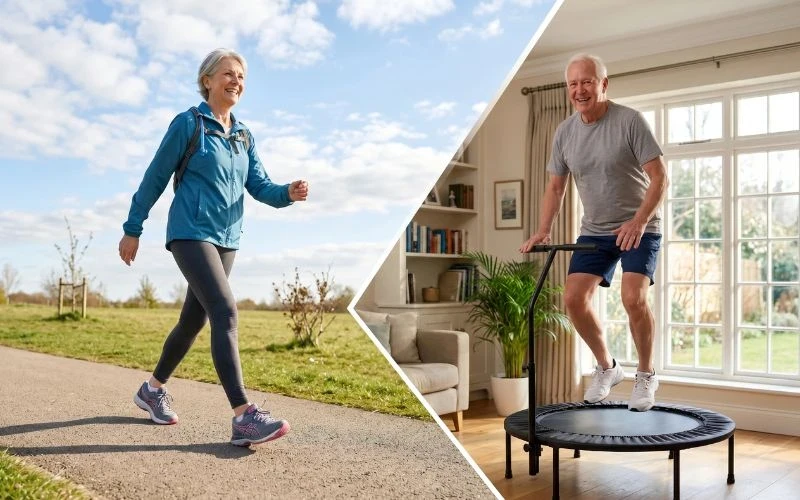
Rebounders vs Walking for Seniors: A Friendly Side‑by‑Side Comparison
Table
| Comparing | Rebounders vs Walking |
|---|---|
| Strength and Muscle Tone | Rebounding engages the core and stabilizer muscles more intensely. Walking strengthens the legs and supports long‑term mobility. |
| Joint Comfort (If your knees or hips complain during long walks.) | Rebounding may feel easier. The trampoline surface absorbs impact, Walking—especially on concrete—can be harder on joints. |
| Balance and Stability | Rebounding actually improves balance because your body constantly adjusts to the soft surface. With a handlebar, it’s very secure. Walking outdoors can challenge balance if sidewalks are uneven or icy. |
| Heart Health (Both activities support cardiovascular health.) | Rebounding tends to raise your heart rate faster. Walking builds endurance over time. |
| Safety (Both are safe when done correctly.) | Rebounding requires a sturdy trampoline and attention to balance. Walking requires awareness of terrain, weather, and footwear. |
| Convenience | Rebounding wins for indoor convenience. Walking wins for fresh air and scenery. |
| Which One Helps More with Weight Loss After 60 (Weight loss as you age is less about intensity and more about consistency.) | Rebounding may burn calories faster in shorter sessions. Walking is easier to maintain for longer periods. |
Many seniors find that combining both keeps things interesting and prevents boredom.
The best exercise choice is the one you’ll actually do regularly.
Safety Tips for Either Activity
- Start slowly and increase time gradually.
- Barefoot or shoes, you decide. (You need good grip on the mat.)
- Keep a water bottle nearby for hydration.
- Stop if you feel dizzy or unsteady.
- Talk to your doctor if you have heart or balance concerns.
Your body will tell you what it needs—listen to it.
How to Decide What’s Right for You
Think about your lifestyle:
- Do you prefer being indoors or outdoors
- Do your joints feel better on soft surfaces
- Do you struggle with balance
- Do you enjoy variety or routine
- What feels fun and sustainable
There’s no wrong answer. The best exercise is the one that makes you feel good and keeps you moving. You don’t have to choose just one, you may want to combine both.
A Simple Weekly Routine You Can Try
- 3 days rebounding (10–15 minutes)
- 3 days walking (20–30 minutes)
- 1 rest or stretching day
This gives you:
- Outdoor movement
- Indoor consistency
- Bone stimulation
- Cardiovascular training
- Balance support
If you prefer walking:
Walk 20–30 minutes, 4–5 days a week
Add 5 minutes of gentle rebounding twice a week for balance
If you prefer rebounding:
- Rebound 10–15 minutes, 4 days a week
- Add two 20‑minute walks for fresh air and endurance
This routine gives you outdoor movement, indoor consistency, muscle and bone strengthening, cardiovascular training, and balance support!
- Choose walking when you want the fresh air.
- When weather limits your outside activity, rebounding is the better choice!
Cellerciser® Mini Trampoline ad

BCAN Rebounder – with Handle,Phone Holder & 2 Pairs Socks
This post contains affiliate links. If you click on and purchase through one of those links, you won’t pay a penny more, but we’ll get a small commission, which helps keep our website operating. Thanks! As an Amazon Associate, I earn from qualifying purchases.
Conclusion: Rebounders vs Walking for Seniors
When it comes to rebounders vs walking for seniors, the truth is that both are excellent choices. Rebounding offers joint‑friendly movement and strong core engagement, while walking supports heart health, mobility, and emotional well‑being.
Many seniors find rebounding fun and energizing. Walking on the other hand, provides a peaceful time to reflect and enjoy nature.
You don’t have to choose one over the other —many seniors enjoy doing both. What matters most is finding movement that feels safe, enjoyable, and sustainable. Staying active at any age is a gift to your body, and it’s never too late to start.
Remember:
The real goal is consistency. The best exercise is the one you’ll continue doing next month … and next year! Your body will thank you for it!
Disclaimer: If you have any concerns or questions about your health, you should always consult with a physician or other healthcare professional. No content on this site should be substituted for direct medical advice from your doctor or other qualified healthcare practitioner. The information contained here is for informational purposes only. It is from my research and personal experience.
Related Posts
10 Tips for Gaining Muscle Mass after 50
Best Rebounder With Stability Bar For Your Budget: BCAN 450/550
Exercise and Bone Density; Achieve and Maintain Vital Bone Strength