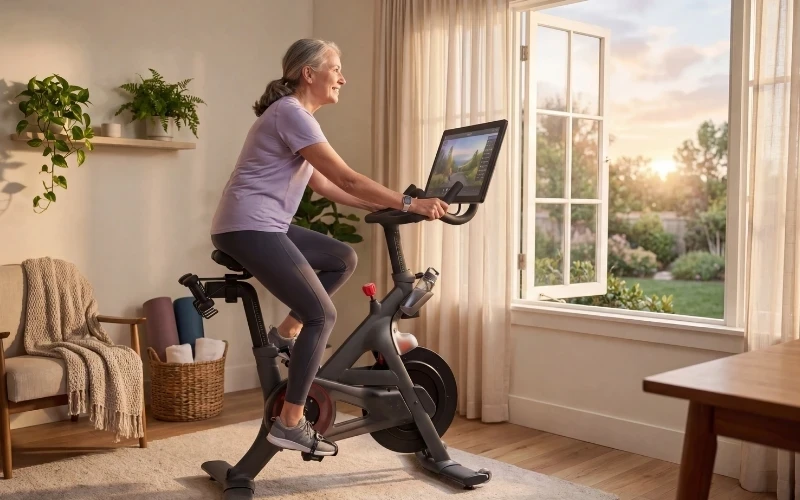
-Protecting Your Heart Without Hurting Your Joints
Exercise Bikes and Health Span go hand in hand when it comes to living well after 60.
Living longer matters but living stronger matters more. Health span is about staying mobile, energetic, and independent as the years add up.
One of the best ways to support that is by improving your cardiovascular fitness. And you don’t need high‑impact workouts or painful joints to get there.
A simple, safe option is available right at home — an exercise bike.
If you’ve read my recent post on Health Span vs. Life Span, you already know the goal isn’t just more years. It’s better years. Daily movement that supports your heart is essential for that.
The good news is you can protect your heart without stressing your knees. A bike makes that possible.
In a Hurry Table
| Exercise Bike | Description |
|---|---|
| Peloton Bikes | 21.5” Rotating Full HD touchscreen, Adjustable Handlebars and Seat with Precision Fitting, Compact Footprint, Front facing speakers for a crystal clear audio experience, Manual Magnetic Resistance with 100 Levels21.5” Rotating Full HD touchscreen, Adjustable Handlebars and Seat, Front-facing Speakers, 100 levels of magnetic resistance. Tailored weekly workout routines. |
| Foldable Multifunctional Exercise Bike | Quiet Workout Bike with Resistance Bands, 8-Level Magnetic Resistance. 300 lb. weight capacity. LCD Monitor |
| MERACH Exercise Bike | Electronic LED Monitor, device holder, dual water bottle holders, non-slip caged pedals, 2-way adjustable handlebar and a 4-way adjustable padded seat, 300 lb weight capacity, 1-yr warranty. |
| Marcy Exercise Bike | 8 levels of magnetic resistance, comfortable padded seat, Weighted pedals. Step-through design. 242.5 Pounds Maximum weight capacity. |
This post contains affiliate links. If you click on and purchase through one of those links, you won’t pay a penny more, but we’ll get a small commission, which helps keep our website operating. Thanks! As an Amazon Associate, I earn from qualifying purchases.
Why Cardiovascular Fitness Matters More After 60
As we age, our risk for heart disease rises. Blood vessels stiffen. VO2 max (a measure of aerobic fitness) naturally declines. Endurance drops if we don’t actively maintain it.
But here’s the encouraging part: the body responds beautifully to consistent, moderate cardio — even in our 60s and 70s.
Regular cycling can:
- Strengthen the heart muscle
- Improve circulation
- Support healthy blood pressure
- Help regulate blood sugar
- Increase stamina for daily life
That last one is often overlooked. It’s not just about preventing disease — it’s about having the energy to travel, garden, play with grandchildren, and move confidently through your day.
That’s health span!
Why Exercise Bikes Are Ideal for Aging Joints
Many adults give up cardio because walking outdoors becomes uncomfortable. Hips ache. Knees protest. Winter weather (especially here in Canada) makes outdoor activity unreliable.
An exercise bike removes those barriers.
Cycling is low impact. Your body weight is supported by the seat, which reduces stress on the joints. There’s no pounding, no sudden stops, no fear of slipping on ice.
For many people over 65, this makes cycling far more sustainable than jogging or even brisk walking.
And sustainability is everything. The best exercise for health span is the one you will actually keep doing.
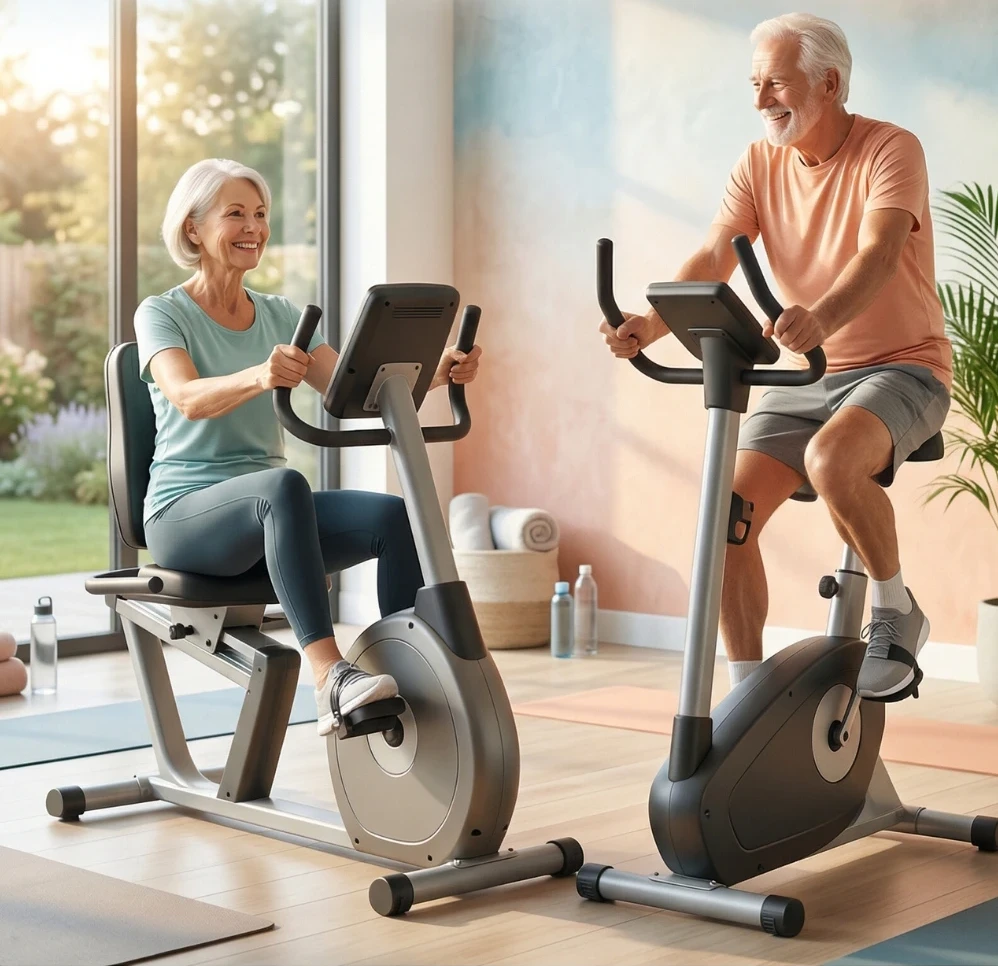
Recumbent vs Upright: Which Is Better for Health Span?
This is one of the most common questions I receive.
Both upright and recumbent bikes can improve cardiovascular fitness. The difference lies in comfort, posture, and ease of use.
A recumbent bike has a larger seat with back support. Your legs extend forward rather than downward. Many seniors find this position more comfortable, especially if they have lower back issues or balance concerns.
An upright bike feels more like a traditional bicycle. It engages the core slightly more and takes up less space, but it requires more balance when getting on and off.
For extending health span, the “best” choice is the one that feels safe and comfortable enough to use consistently.
If you struggle with balance or back discomfort, a recumbent bike often becomes the clear winner.
Protecting Muscle While Supporting the Heart
One beautiful thing about cycling is that it doesn’t just train the heart — it also supports the large muscles of the legs.
After 50, muscle loss accelerates unless we actively challenge it. The quadriceps, hamstrings, and glutes are some of the largest muscles in the body. Keeping your legs strong helps preserve mobility and stability.
While cycling isn’t a replacement for strength training, it absolutely contributes to maintaining lower-body endurance and muscle engagement.
That combination of — strong legs and a healthy heart — directly influences health span.
Magnetic Resistance vs Friction: Does It Matter?
When choosing a bike, resistance type often comes up.
Magnetic resistance bikes tend to be quieter and smoother. They require less maintenance and feel more consistent as you pedal. For home use, especially in shared living spaces, this can be a big advantage.
Friction resistance bikes are usually more affordable, but they may be slightly louder and require occasional adjustments.
For someone investing in long-term health span, a smooth, quiet ride often increases the likelihood of daily use.And again — daily use is what changes outcomes.
Folding Bikes, Compact Models, and Space Considerations
One reason many people hesitate to purchase equipment is space.
If you live in a smaller home or condo, a folding bike can be a practical solution. It can be stored away when not in use, reducing visual clutter.
The key is to think about visibility. If a bike is tucked away in a closet, it’s easier to forget about it. If it’s placed near a window or television where you naturally spend time, you’re more likely to hop on for 10 minutes.
Health span is built in small daily decisions — not grand gestures.
How Much Cycling Is Enough?
You don’t need intense workouts to benefit.
Many adults over 60 thrive on:
- 20-30 minutes of moderate exercise per day
- Moderate resistance
- A pace that slightly elevates breathing but still allows conversation
This type of steady effort supports cardiovascular fitness without overwhelming the body.
Within a few weeks, many people notice improved endurance, easier stair climbing, and less fatigue during everyday activities.
Those small improvements compound over time.
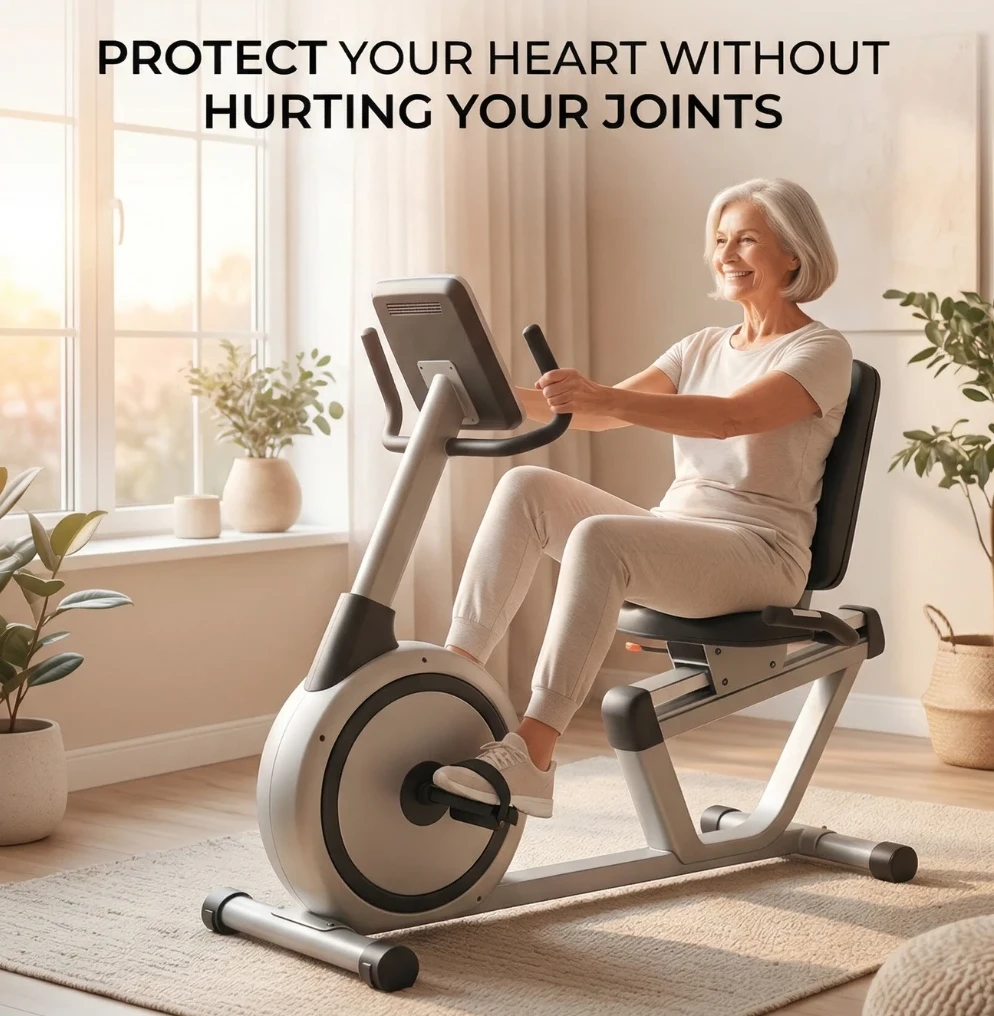
Exercise Bikes and Health Span: The Bigger Picture
When we zoom out, the connection becomes clear.
Exercise bikes and health span are linked because cycling:
- Supports heart health.
- Encourages daily movement.
- Protects joints.
- Engages large muscle groups.
- Improves endurance for real life.
- It’s not flashy. It’s not extreme. It’s simply consistent.
And consistency is what protects independence.
If your goal is to increase health span, not just life span, choosing a joint-friendly cardio option like an exercise bike may be one of the wisest decisions you can make.
Frequently Asked Questions About Exercise Bikes and Health Span
1. Are exercise bikes good for seniors over 60?
Yes, exercise bikes are one of the safest cardio options for adults over 60. Because cycling is low impact, it reduces stress on knees and hips while still strengthening the heart and improving circulation. For many older adults, this makes biking more sustainable than walking long distances or jogging.
2. Is a recumbent bike better than an upright bike for older adults?
It depends on comfort and balance. Recumbent bikes offer back support and a wider seat, which many seniors prefer. Upright bikes engage the core slightly more and take up less space. For improving health span, the best bike is the one you feel safe using consistently.
3. How long should seniors ride an exercise bike?
Most adults over 60 benefit from 30 minutes of moderate exercise per day. While cycling, you should be breathing a little harder but still able to talk. Consistency matters more than intensity when improving cardiovascular health and extending health span.
4. Can cycling help prevent heart disease?
Regular cycling supports heart health by improving circulation, strengthening the heart muscle, and helping regulate blood pressure and blood sugar. While no exercise guarantees prevention, consistent moderate cardio significantly reduces risk factors.
Final Thoughts
A longer life is a gift. But a longer life filled with strength, stamina, and confidence is even better.
An exercise bike might not look like a longevity tool at first glance. But when used regularly, it quietly supports the systems that matter most — your heart, your muscles, your circulation, and your energy.
Because health doesn’t start in the doctor’s office — it starts in your daily habits.
Disclaimer: If you have any concerns or questions about your health, you should always consult with a physician or other healthcare professional. No content on this site should be substituted for direct medical advice from your doctor or other qualified healthcare practitioners. The information contained here is for informational purposes only. It is from my research and personal experience.
Related Posts
How to Choose a Stationary Exercise Bike